
We often forget that chocolate comes from a fruit: Cacao or cocoa.
Maybe it’s because fruits are usually juicy, refreshing, and naturally sweet—a list of adjectives we wouldn’t use to describe chocolate.
But in the contrast between the depth of chocolate and the brightness of fruit lies an opportunity to create exciting flavor combinations!
In this post, I’m going to reveal four tips you can use to make an amazing fruit ganache.
1. How you can make fruit purées for your bonbon fillings
I grew up in Colombia, a country I would describe as fruit heaven.
There are hundreds of exotic tropical fruits; they’re cheap and available all year long (one of the perks of living right on the Equator and having no seasons).
If you live in a place where you find unique, seasonal fruit, there’s no point in always buying purées. Plus, making them is incredibly easy.
I always strive to make my artisanal purées match commercial ones (I use Adamance), so I combine 90% fruit and 10% sugar. This sugar-to-pulp ratio is crucial to keep your product’s quality, taste, and water activity in check.
Then, I pasteurize my purées by bringing them to a boil, and they’re ready to use!
2. How fruits interact with your ganache and how to bring out their flavor
When we use fruit, we dream of keeping all those colors and distinctive flavors intact. But then we cook and mix those purées with chocolate in our ganaches, inevitably losing some of their lovely qualities.
To counter this, you can accentuate your fruit products by adding using extracts.
For example, if you’re making a pineapple ganache, add a few drops of pineapple extract to your recipe. That will bring the flavor back to its former glory.
3. Choose the type of chocolate you’re going to use wisely
Before you make your ganache, ask yourself: If I mix this fruit with dark or milk chocolate, will people be able to taste it?
Except for citrus like lime, tangerine, or orange, the answer is probably no.
So, if you’re using other fruits (especially berries and stone fruit), try working with white chocolate first.
Not only is it an excellent blank canvas for flavor, but it also showcases the natural color of the fruit in your ganache!
4. How fiber affects your ganache
Remember how I said you should use extracts? This is especially useful when you’re making ganaches with fruits that are high in fiber.
Stone fruit and pineapple, for example, have so much fiber that they will dry out your ganache if you use too much purée. This, in turn, will make the filling too viscous to pipe into the shells.
In this case, I recommend reducing the percentage of fruit and adding some extract to showcase the fruit without losing the “pipeability” of your fillings.
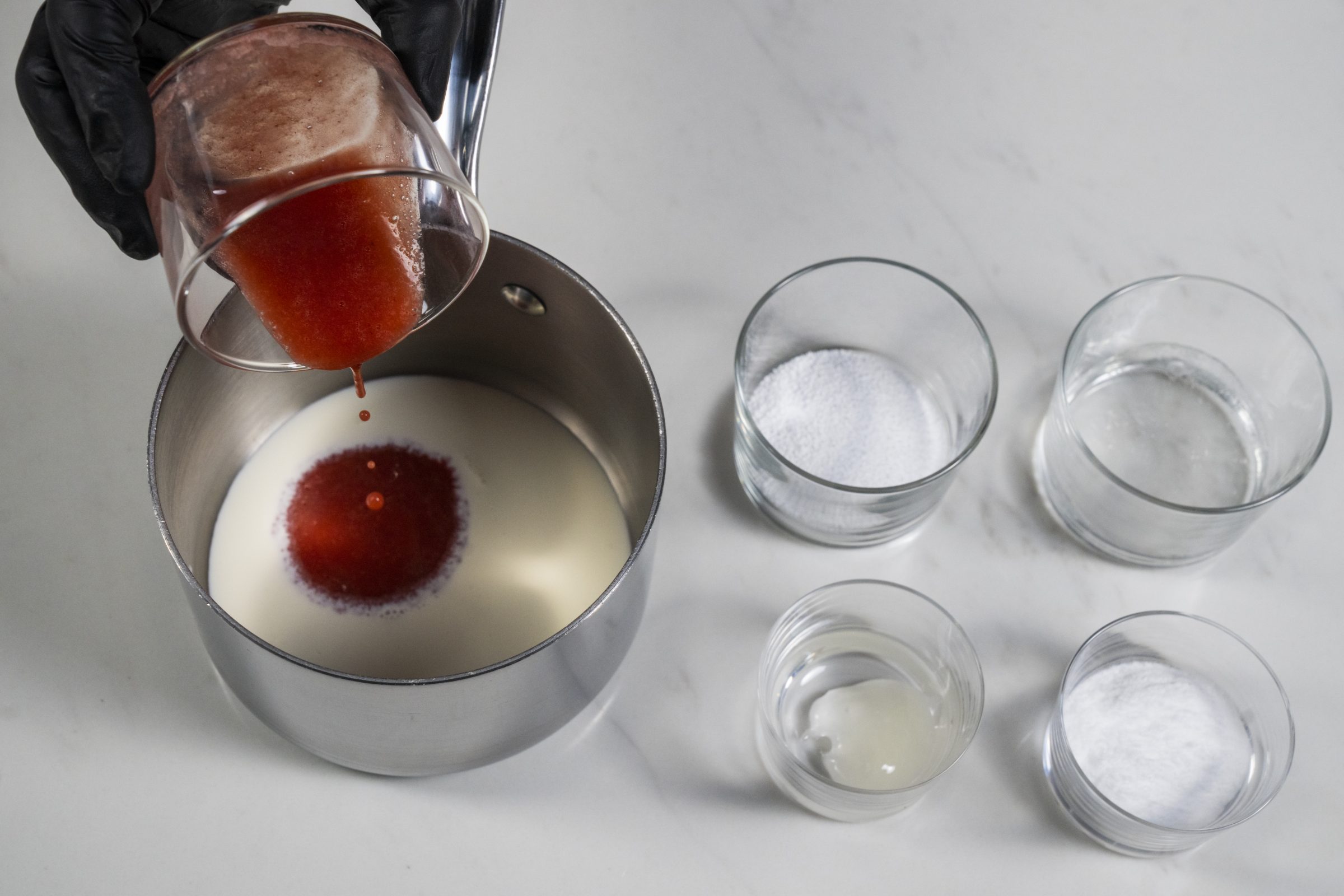
Another option is infusing the cream or milk in your recipe with the fruit, straining it, and making the ganache with just the infusion. That’s how I make my banana ganache, for instance.
Conclusion
With so many seasonal, tropical, and exotic fruits, using them in your chocolate products can become a never-ending (and never-boring) experience.
Just remember:
- Add 10% sugar to your homemade purées and boil them before using.
- Use fruit extracts to bring out their flavor.
- Try using a chocolate type that complements your fruit instead of overshadowing it.
- With fruits high in fiber, reduce the percentage of purée and add an extract (or infuse the cream) to prevent the ganache from drying out.
I hope you can start combining the fruits you love with the amazing chocolates you want to create with these 4 tips!
-Melissa