
Remember that scene from Ratatouille where Remy tries a little strawberry with cheese and, all of a sudden, a symphony of flavors starts playing around him?
Every time I see it (more times than I care to admit, since I have a 3-year-old at home), I can’t help but notice how telling that whole scene is about the process of creating a memorable bonbon.
If you think about it, Remy’s reaction is not inspired by an avant-garde flavor combination. The simple flavors we grew up with, the ones we reach for when we want something comforting, those are the real difficult ones to get right. They’re also the most effective ones when you want people to have those truly special moments.
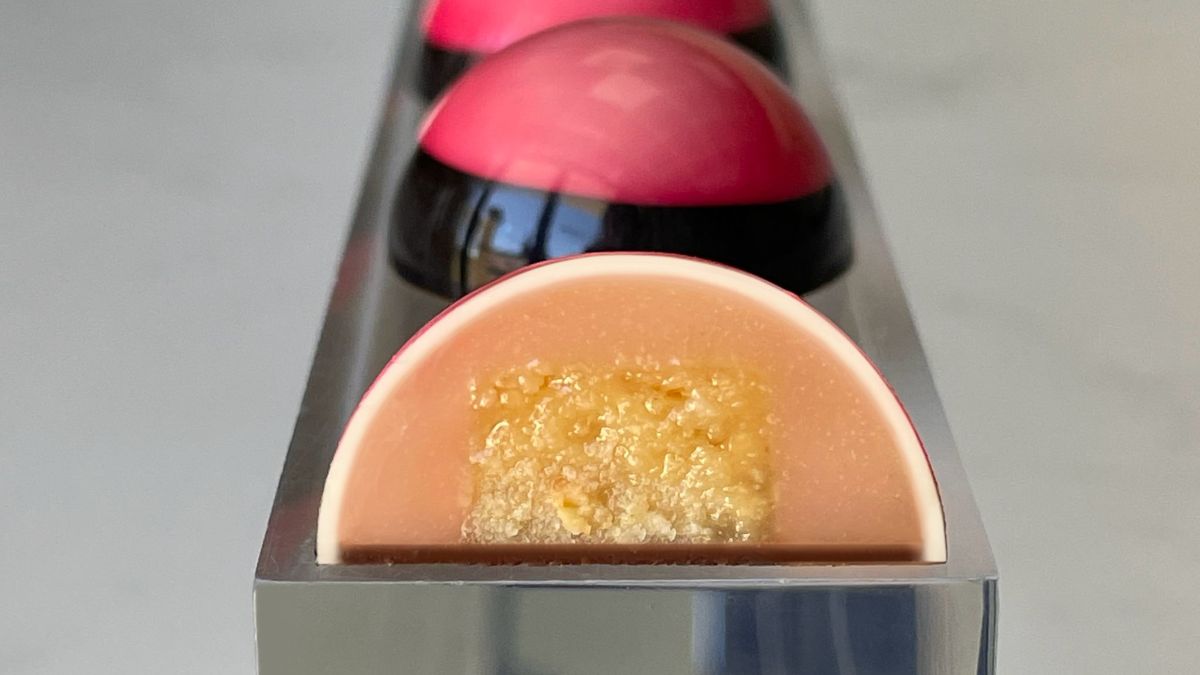
I remember a few years ago how emotional a Portuguese friend got when he tried my crème brûlée bonbon. To him, it tasted just like a pastéis de nata, Lisbon’s most beloved dessert.
His reaction to the bonbon was so powerful that from that day on, I started calling it the “Ratatouille effect.”
That made me realize how brutally honest and objective we have to be with ourselves if we also want our flavors to taste honest to the people who try them.
There’s a great responsibility when you claim your bonbons taste like s’mores or banana bread.
People are experts in the flavors they love, so we shouldn’t underestimate how quickly they can tell whether your experiment worked or not.
If it’s a mojito bonbon you’re after, the freshness, citrusy goodness, and the mintiness need to be translated into the bonbon’s flavor.
My advice is to reverse-engineer what makes those flavors special, thinking in detail about how texture plays into the overall tasting experience.
Remember, you only have one chance to convey your idea with a bonbon.
That “Ratatouille effect” can be deeply meaningful if you capture all that makes a recipe special in that simple mouthful; that’s the true power of an unforgettable bonbon.
-Melissa