
In my last newsletter, I looked back on my early years as a pastry chef. Especially how we were taught that respect came from fear in the kitchen.
Today, I wanted to touch on something that has stayed on my mind for the past two weeks. It’s how strongly I disagree with the common idea that “diamonds are made under pressure.”
In my experience, that’s rarely the case.
I worked in abusive kitchens. The results, in terms of the products we created, were good. It’s true.
But I don’t know if they were good enough to justify the impact this had on team morale and on the sense of self-worth of those who bore the brunt of the abuse.
Not to mention, this approach didn’t really prepare us for the autonomy you need to create something meaningful to you or to lead others—only for obedience.
I have a deep admiration for the Chocolate Academy in Spain.
Back in the day, this admiration stemmed from seeing how much innovation in the world of chocolate and pastry was coming out of that single team of incredible chefs. But then, when I visited them for the first time, it clicked.
It was common, for example, to see Chefs Morató, Monzonis, Ribé, and Davi laughing and trading feedback on their ideas with camaraderie.
They were thorough and serious about their work and love for chocolate and pastry. But they also trusted each other’s capacities enough to know that, to give shape to something exceptional (a product, a project, opening a shop, or running a school), you need support.
In fact, treating people otherwise, through disrespect and a false sense of superiority, is the fastest way to make them shy away from their own potential.
In my experience, if you trust people’s capacities and give them the respect they are due, they are more inclined to see what happens if they chase their own ideas.
Why? Because they start losing the fear of messing up and sticking to what usually works, to what Chef likes, to what won’t make him/her lash out at me.
I’ve seen it in my own team, and I’m actually really proud of how little staff turnover we have here at the school.
What do you think about all this?
-Melissa
Recipe Time
Sea Salt Caramel Ganache
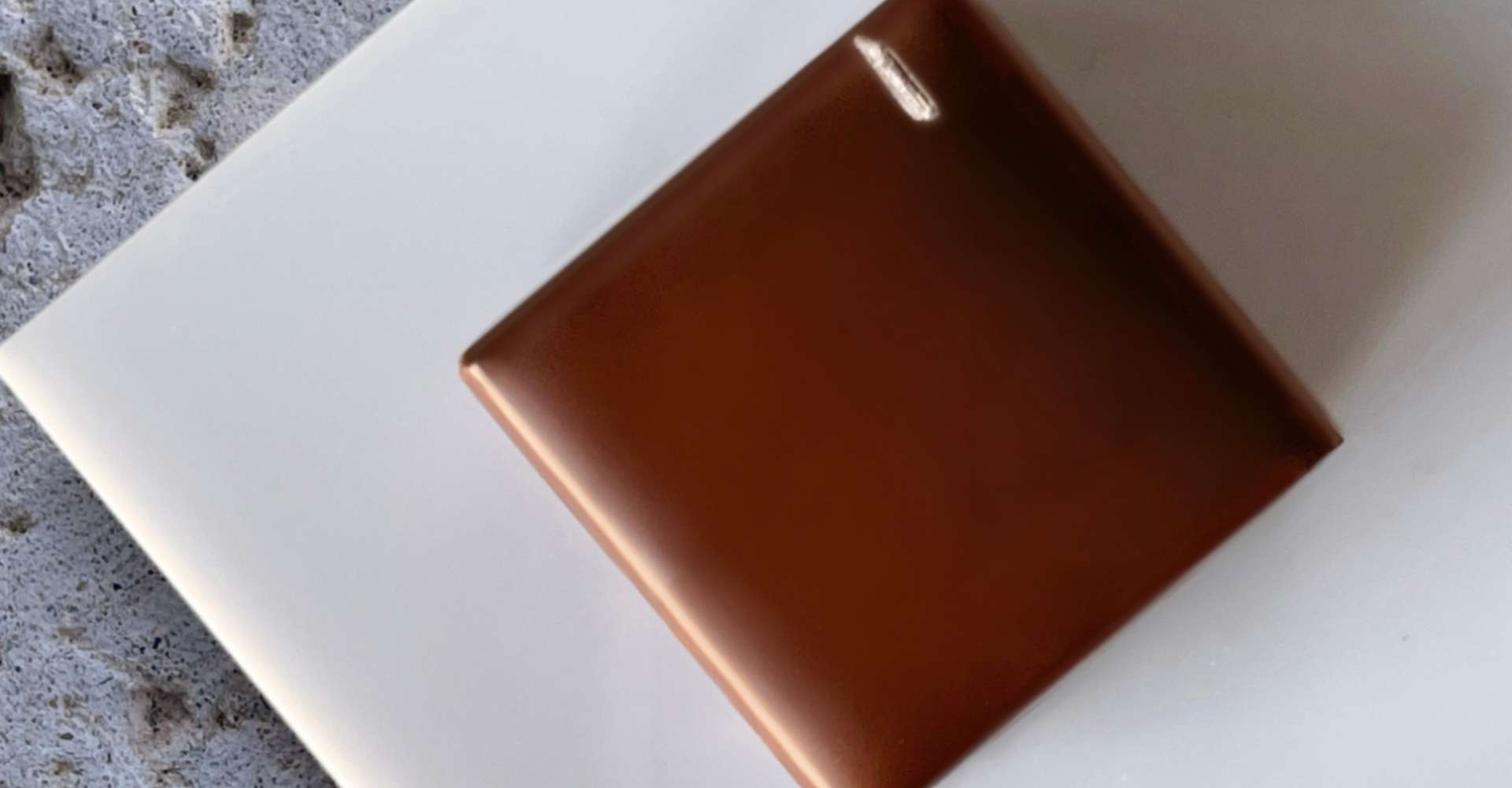
SHELF LIFE: 120 days if stored below 16ºC
YIELD: 98 square pieces 2.2 cm x 2.2 cm 0.86″ x 0.86″
FRAMES: two 18 cm x 18cm x 1 cm height
INGREDIENTS
· Cream 35% Fat | 256 g
· Glucose Syrup | 21 g
· Butter 82% Fat | 40 g
· Sea Salt | 2,4 g
· CHEFF RUBBER Sorbitol Powder | 30 g
· Granulated Sugar or Sucrose | 114 g
· Valrhona Bahibé 46% Milk Couverture | 162 g
· VALRHONA Caraïbe 66% Dark Couverture | 162 g
· VALRHONA Cacao Butter | 32 g
· Total Weight | 819 g
METHOD
· Make the bottom chablon (to learn how to make it, click here for our free chablon class).
· In a pot, boil the cream, the glucose syrup, and the sea salt.
· In a different pot, melt sorbitol completely, then add sugar slowly to caramelize.
· Deglaze with the butter and the hot cream, then pour over the partially melted chocolates.
· Make a good emulsion using a hand blender.
· When the ganache is at 35˚C, pour it into the frames.
· Cover with plastic, and let crystallize in the fridge for 2 hours.
· Then, take it to a chocolate room between 14ºC-16˚C and let it crystallize overnight.
CHABLON AND ENROBAGE
· Make the top chablon (to learn how to make it, click here for our free chablon class).
· Cut using a 2.2 cm guitar frame.
· Place in the freezer for 10 minutes; this shock in temperature will help separate the ganache squares more easily.
· Let the bonbons get to 20ºC before enrobing them in pre-crystallized dark chocolate.
· Let them crystallize in a cold room at 16ºC overnight before packing them.
· The next day, pack them well and, ideally, store them in a cold room at 14ºC-16ºC with a relative humidity between 60%-70%.